It almost seems like a silly question, but it's worth answering nonetheless. Why? Because it's too important not to-a great many people could avoid the potentially serious health problems associated with being overweight or obese by losing the extra pounds. And the sooner the better.
Obesity and related conditions take an enormous toll in terms of reduced quality of life and lost productivity for individuals. They're also extraordinarily expensive for society at large, accounting. The U.S. alone spends an estimated $168 billion annually to treat chronic diseases like Type 2 diabetes, heart disease, cancer, high blood pressure, metabolic syndrome, polycystic ovary syndrome (PCOS), high cholesterol, gallstones, osteoarthritis and more.
- Type 2 diabetes is a disease most commonly caused by obesity. Though it used to develop primarily in adults, it is now quite common in children as well, with the recent increase in the rate of childhood obesity. Blood sugar levels become elevated due to the insulin resistance caused by obesity and greatly increase the risk of developing diabetes.
- Heart disease can develop as a result of fatty deposits building up in the arteries, and hardening of the arteries (atherosclerosis) is 10 times more common among the obese than in the population with normal body weight. Fat tissue also requires blood to survive, so more blood vessels are created, putting greater strain on the circulatory system, increasing blood pressure and making the heart work harder to circulate that extra blood.
- Those who are obese have an increased risk of cancer, especially cancer of the colon, breast, prostate, gallbladder and uterus.
- Obesity adversely affects both the metabolism and endocrine system, often resulting in metabolic syndrome, the fastest-growing obesity-related health problem. This refers to a group of risk factors that increase your risk of more serious diseases, such as coronary heart disease, stroke and diabetes. Symptoms include excess weight particularly located around the middle of the body, insulin resistance, low HDL ("good") cholesterol and high triglycerides.
- Women who are obese can suffer from a number of reproductive health problems, including infertility, uterine cancer, and PCOS. Because obesity causes disruption in the menstrual cycle and the endocrine system that is responsible for the delicate balance of hormones necessary for successful ovulation, studies have found that even a modest reduction in body fat of between 5 and 10 percent is often enough to restore ovulation and fertility.
- Osteoarthritis has grown increasingly common as the rate of obesity has increased. The excess weight adds to increased wear and tear on the joints, particularly on the knees and hips. Obese women are nine times more likely to suffer from osteoarthritis of the knee, often leading to the need for a total joint replacement. However, researchers have found that losing as little as 11 pounds can reduce the risk of knee osteoarthritis by half.
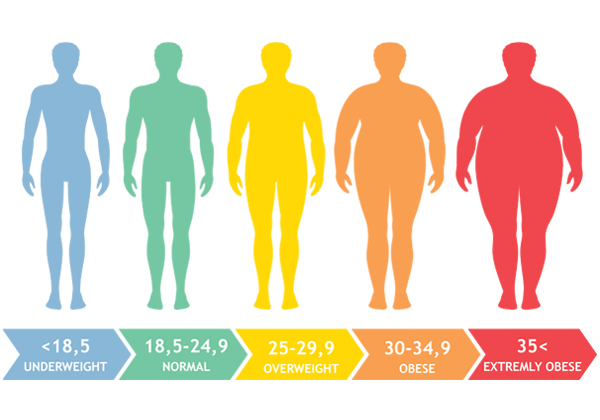
- Having a BMI of 30 or higher increases a person's risk of developing a severe case of COVID-19 by 27%. And a BMI of 40 or higher doubles a person's risk. In fact, obesity is the number one risk factor for developing a severe case of COVID-19 in people under the age of 55. People don't always see obesity as abnormal, since it's quite prevalent, but it's important to know if your weight is putting you at risk for COVID-19, as well as other health conditions.
A person is considered obese if he or she has more body fat than what's considered healthy for his or her height. A quick measurement called body mass index (BMI) is used as a screening tool for obesity.
Need more incentive? Carrying lots of extra weight is also very hard on your back, hips and knees. Losing it can reduce the cumulative wear and tear on your musculoskeletal system-the bones, muscles and joints that you count on to remain mobile throughout your life.
But let's go back to that last point...it seems we are worrying far too much about the spread of the virus when we should focus much more on our own personal health and immune system strength. Obesity and chronic inflammation in the body are a PERFECT replication environment for viruses. It is not likely that we can stop the spread of the virus, but we can stop the replication of it once we have come in contact with it! Please take action now on your own responsibility and what you can control. I am here to help with nutritional consultation, supplement advice, and simply answering questions.
Many of know we need to lose some weight. Let's start taking action.

No comments:
Post a Comment